Focused precision
The most accurate sound ever engineered for venues.
EDC Acoustics develops advanced loudspeaker and spatial-audio technologies that give designers precise control over where sound goes, how it is perceived, and where it does not belong.
Clear, immersive, spatially accurate sound — without exciting the room, disturbing adjacent spaces, or compromising the listener experience.
- Best of Show InfoComm 2025 · SVC
- Best of Show ISE 2025 · SVC
- Best Immersive Experience ISE 2025 · rAVe
- Best of Show InfoComm 2023 · Mix, SVC
Why it matters
Sound, without excess.
In most venues, sound is broadcast broadly into the space and allowed to interact freely with architecture. Walls, ceilings and reflective surfaces are excited before the sound reaches the audience — producing reverberation, echoes, reduced intelligibility and noise spill.
EDC systems address this problem at the source. By focusing sound energy only where it is useful, unnecessary interaction with the room is reduced. This is not a reduction in capability or impact. It is sound applied with intent.
- Clarity improves.
- Reverberation is shortened.
- Noise spill is minimised.
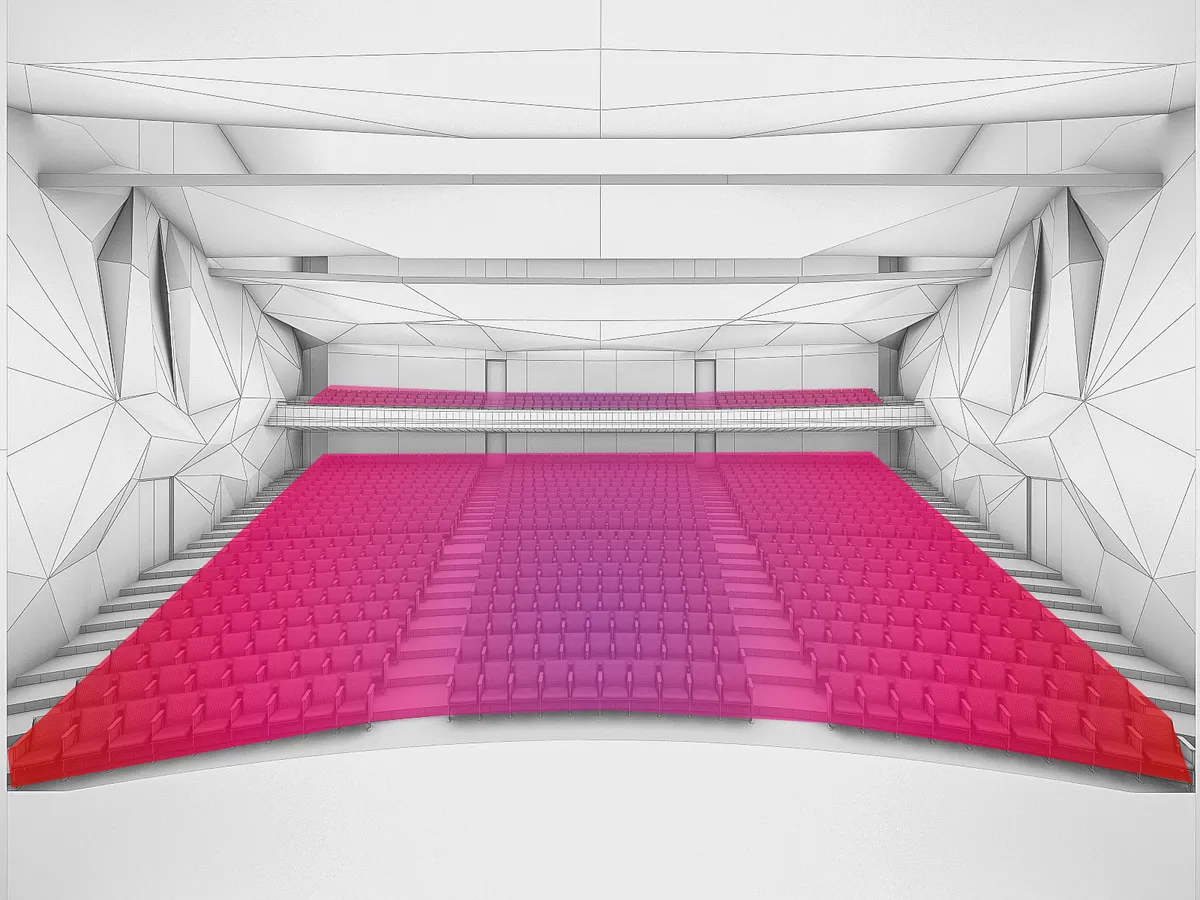
Technology
Three technologies. One principle.
Sound should be controlled before it enters the space. Each technology focuses on a different dimension of sound behaviour; each is independent, and all are built on focused precision.
01
3D Beamforming
Controls where sound goes
A method of controlling acoustic radiation in three dimensions so that every listener receives the same level, the same frequency response and the same spatial image — and the room is left out of it.
02
Volumetric Wavefield Synthesis
Controls how sound is perceived
A method of reproducing sound so that spatial imaging, level and frequency response are consistent for every listener within a defined volume — sound that originates inside the listening space rather than at its edges.
03
Octoid & Quadoid radiation
Controls where sound does not go
Loudspeaker technologies that confine sound to a defined fraction of a sphere — a quarter (Quadoid) or an eighth (Octoid) — across the full audio band, in a compact form. New technology, coming soon.
Coming soon04
Software — Pro, Rapid and AR
Predict, visualise, verify
EDC's software tools predict, validate and verify sound behaviour across an entire audience before a system is installed — then measure the room and close the loop. Pro is the full design environment; Rapid deploys with the same engine.
Immersion through accuracy
Immersion is not created by volume or spectacle.
It is created when sound arrives with the correct timing, level and direction. When sound is precisely focused and spatially correct, the brain accepts it as real. Voices remain anchored. Instruments occupy stable positions. The listener stops searching for the source and simply experiences the sound.
Hyper-realistic localisation
The same experience, everywhere.
Conventional systems create a single ideal listening position; outside it, localisation collapses. EDC technologies remove the concept of a sweet spot. Every listener hears the same spatial image, with stable direction and depth, wherever they are positioned.
Personal listening
Sound for one person, without headphones.
In museums, an exhibit can speak to one visitor without affecting the space around them. In galleries and public environments, sound can follow a listener or remain confined to a single location — personal, intentional and immersive, without isolating the listener.
Hardware
Three loudspeaker families. One standard of precision.
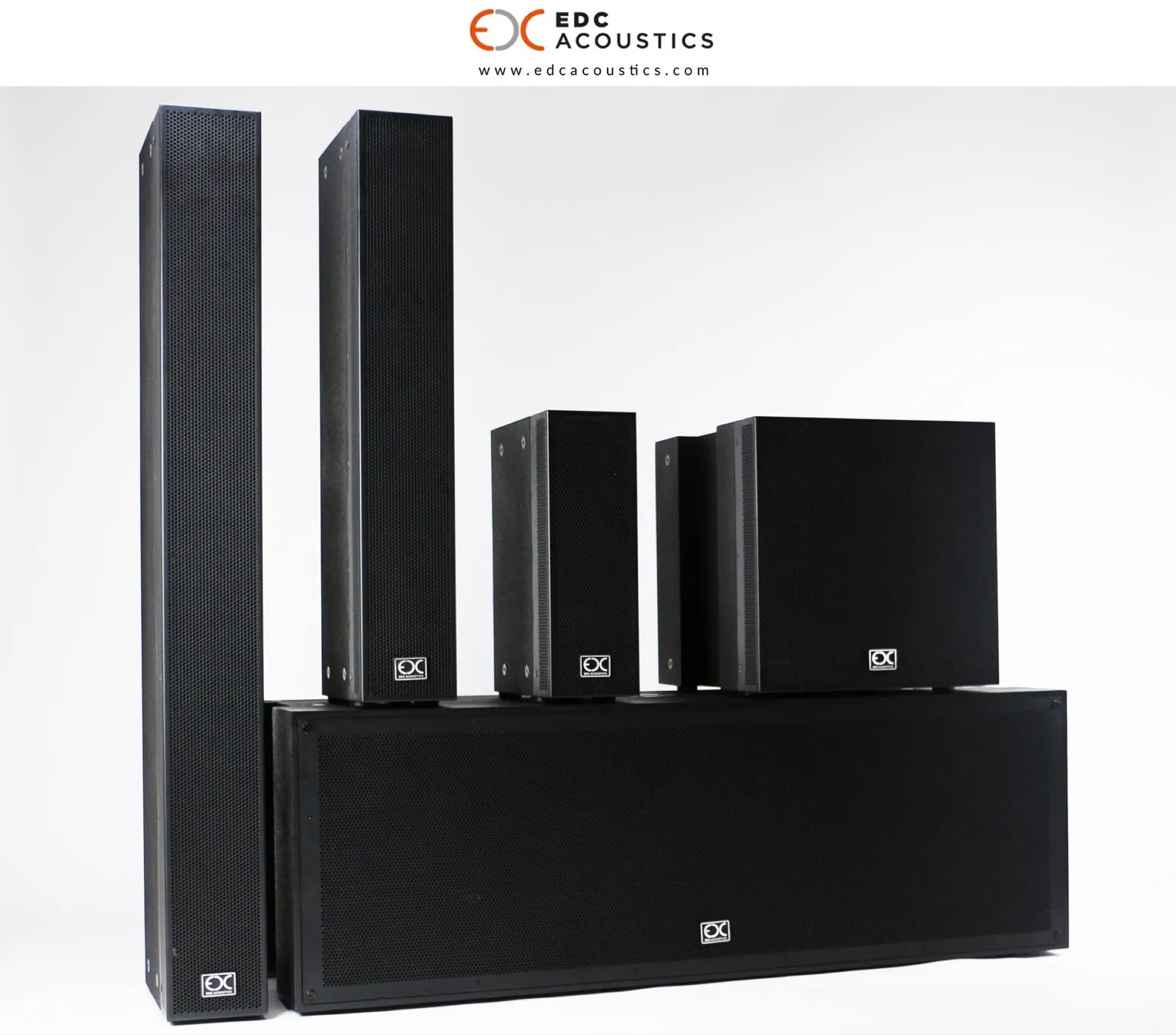
Software-defined beamforming loudspeakers for controlled coverage. Volumetric Wavefield Synthesis systems for consistent immersion. Octoid and Quadoid loudspeakers for broadband containment.
Proven at scale
Installed where sound is hard.
A heritage station serving 250,000 people a day. A headquarters with a six-second reverberation time. A 5,300-seat arena. The same cabinets, shaped to each room.

Sydney Trains — Central Station
Sydney, Australia
Heritage-listed interchange serving 250,000 people a day. Horizontally mounted SC columns cut cross-platform spill, improved intelligibility and needed far fewer cabinets than a distributed system.
SC-30 · SC-60 · SC-90
Mastercard
New York, USA
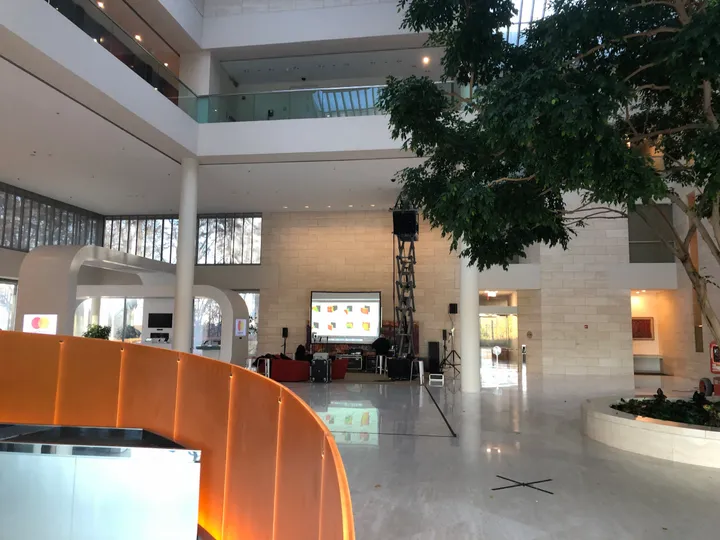
A large, highly reverberant headquarters space with multiple modes of use. SQ-90, SS-3 and SC-60SL cabinets achieved a speech transmission index above 0.85 in a room with an RT60 over six seconds.
8 × SQ-90 · 2 × SS-3 · 8 × SL-60
Davidson College Wildcats
Davidson, North Carolina, USA
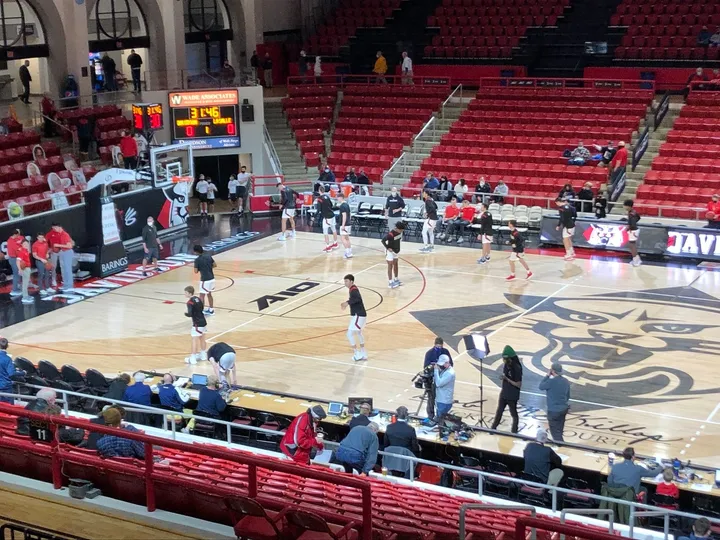
A 5,300-seat, multi-level, highly reverberant arena. Integrator Clarity selected SQ-90s to shape the wavefront to the room and minimise hangs.
SQ-90 arrays
Installed and trusted at










Solutions
Outcomes before categories.
EDC does not design products around venue labels. The same hardware families are configured to solve the specific problem each venue presents — coverage consistency, perceptual accuracy or sound containment.
Software & developers
What is modelled is what is heard.
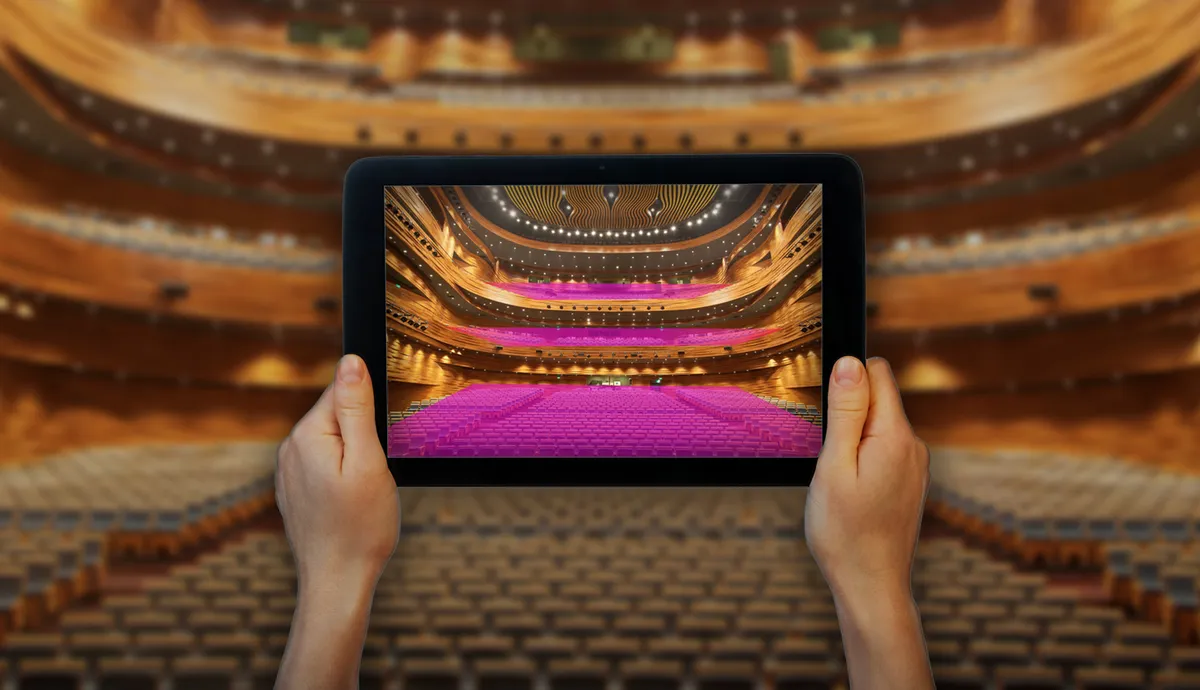
Audience areas are defined in augmented reality in the real venue. Coverage, level and frequency response are predicted at thousands of positions, then measured in the room and corrected. Design assumptions are proven; outcomes are verified.
For integrators and developers, the same control path is being opened: a documented protocol, an OSC address space, SDKs, a device simulator and plug-ins for the tools you already use.
Next step
Hear what happens when nothing else interferes.
An EDC session is a technical evaluation of sound behaviour, not a sales demonstration. See reflections reduced, coverage stabilised and spatial accuracy preserved — modelled first, then measured.