Beam-steering loudspeakers
Beam-steering loudspeakers: aim the sound, not the cabinet.
EDC's S-Series are software-defined columns and square arrays. Every transducer has its own amplifier and processing channel, so one cabinet forms up to four independent beams — each shaped horizontally and vertically from 1° to 120° — and clusters behave as a single source. Prices from US$7,044.
What beam steering does
Direct sound reaches the listener before the room does.
A steerable loudspeaker controls its coverage electronically instead of by cabinet shape. Energy is placed on the audience and kept off walls and ceilings, so reverberation, echoes and spill fall without turning the level down.
What software-defined adds
Three dimensions, four beams, one inventory item.
Most steerable columns control one axis. EDC shapes coverage horizontally, vertically and in depth, produces four independent beams per cabinet, and does it without shading drivers down — every transducer contributes full bandwidth whether the beam is narrow or wide. Coverage changes are a preset, not a rigging call.
The range at a glance
Column or square array — which and when.
Columns (SC, SL) for walls, pilasters and horizontal mounting across platforms; the SQ-90 square array for arenas, theatres and clusters; SS subwoofers that match the SQ-90 footprint and fly with it.
| Model | Format | DSP channels | Frequency range | SPL (published) | Dimensions W×H×D | Weight | US list |
|---|---|---|---|---|---|---|---|
| SQ-90 | Square array | 90 | 80 Hz – 20 kHz (±3 dB) | 106 dB at 16 m (1 element) | 425 × 430 × 485 mm | 36 kg | $13,104 |
| SC-30 | Column | 30 | 100 Hz – 20 kHz (±3 dB) | 95 dB at 10 m (1 element) | 142 × 430 × 330 mm | 12 kg | $7,044 |
| SC-60 | Column | 60 | 100 Hz – 20 kHz (±3 dB) | 101 dB at 10 m (1 element) | 142 × 860 × 330 mm | 24 kg | $10,188 |
| SC-90 | Column | 90 | 100 Hz – 20 kHz (±3 dB) | 104 dB at 10 m (1 element) | 142 × 1290 × 330 mm | 36 kg | $13,104 |
| SL-30 | Slim column | 30 | 80 Hz – 20 kHz (±3 dB) | 95 dB at 10 m (1 element) | 142 × 860 × 147 mm | 16 kg | $8,244 |
| SL-60 | Slim column | 60 | 80 Hz – 20 kHz (±3 dB) | 101 dB at 10 m (1 element) | 142 × 1290 × 147 mm | 28 kg | $10,788 |
| SS-1 | Subwoofer | 1 | 25 Hz – 125 Hz | 125 dB at 10 m (1 element) | 425 × 430 × 485 mm | 25 kg | $7,950 |
| SS-3 | Subwoofer | 3 | 25 Hz – 125 Hz | 134 dB at 10 m (1 element) | 1275 × 430 × 485 mm | 55 kg | $10,188 |
Common to all full-range models: coverage 1°–120° horizontal and vertical; pan/tilt ±60° in 0.1° steps; 4 beams; FIR 2,048 taps; 8-band EQ, compressor, limiter, delay to 100 m; XLR line in/out with optional AES3 or Dante; RJ45 control; powerCON TRUE1; weatherised and monitored versions. SPL figures are single-cabinet, configuration dependent; peak and continuous values with method are being published.
Models
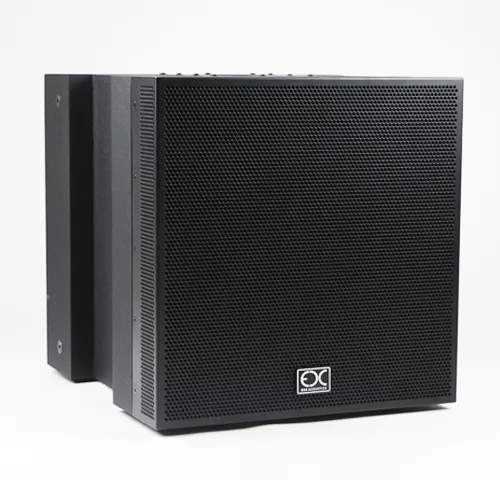
SQ-90
90-channel software-defined square array — the flagship.
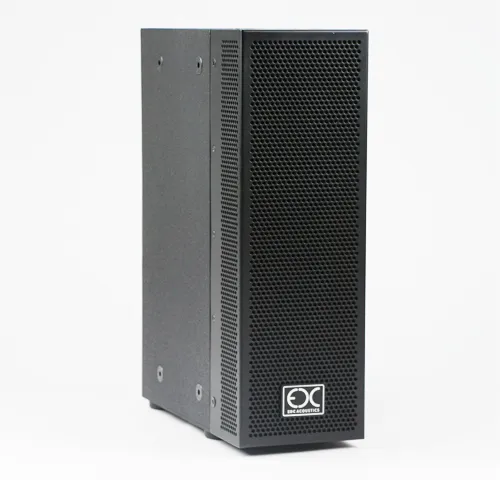
SC-30
Compact 30-channel column for space-limited installations.
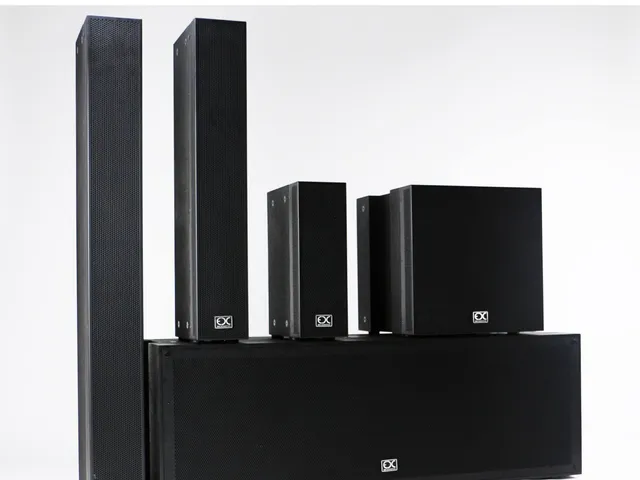
SC-60
60-channel column — the workhorse for rooms and halls.
SC-90
90-channel column — full control from 350 Hz.
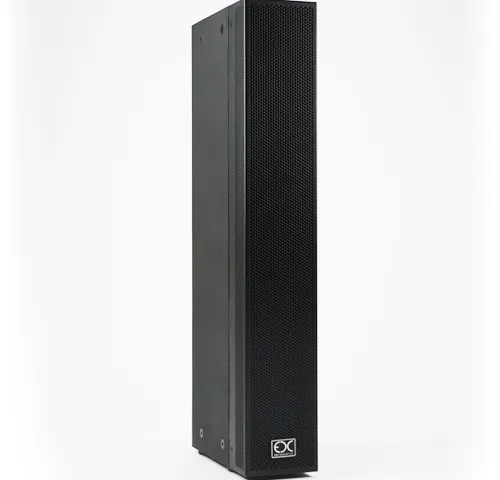
SL-30
Slim-line 30-channel column, 147 mm deep.
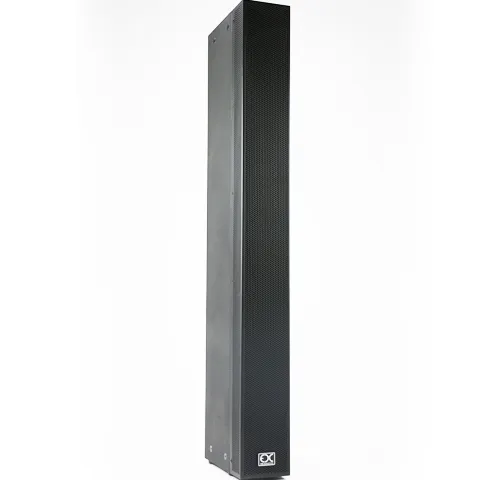
SL-60
Slim-line 60-channel column for wide, shallow rooms.
SS-1
Steerable 12-inch subwoofer matching the SQ-90 footprint.
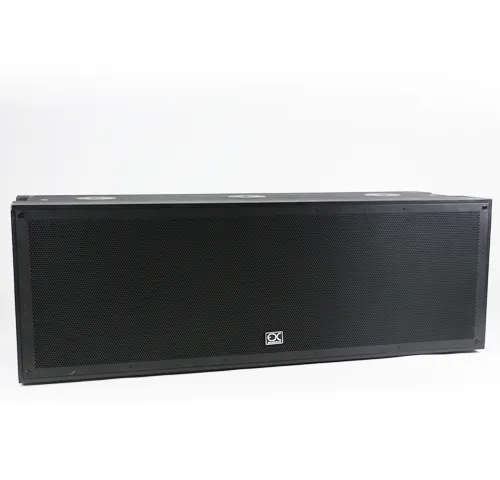
SS-3
Three-driver steerable subwoofer for arrays and arenas.
Where it is used
One range, many rooms.
- Houses of worship — clarity without distraction
- Transportation & public spaces — intelligibility in complex environments
- Theatres & performance venues — consistency across the audience
- Corporate & boardrooms — sound for the room you actually have
- Museums & exhibitions — sound placed with intent
- Education & lecture spaces — every seat a listening seat
- Retail & experiential environments — engagement without noise
- Large & multi-use venues — one system. many uses.
- Live events & rental — coverage you can carry
Design data for consultants
Everything a specification needs, in one place.
Datasheets, Architects & Engineers text, rigging drawings and the iOS application guide are in Resources. GLL files for EASE, Revit families, declarations of conformity and warranty terms are being published and are listed there with their status.
Resources & downloadsFrequently asked questions
What is a software-defined loudspeaker?
How many beams can one EDC loudspeaker produce?
How is this different from a steerable column?
Are the speakers for speech, music or both?
What is the frequency range?
How loud are they?
Can they be used outdoors?
Do they take Dante or AES3 digital audio?
How are they mounted?
Can the system report faults?
Is there a GLL file for EASE or EASE Focus?
Is there Architects and Engineers specification text?
Next step
Hear what happens when nothing else interferes.
An EDC session is a technical evaluation of sound behaviour, not a sales demonstration. See reflections reduced, coverage stabilised and spatial accuracy preserved — modelled first, then measured.