Predict, visualise, verify
Software — Pro, Rapid and AR
EDC's software tools predict, validate and verify sound behaviour across an entire audience before a system is installed — then measure the room and close the loop. Pro is the full design environment; Rapid deploys with the same engine.
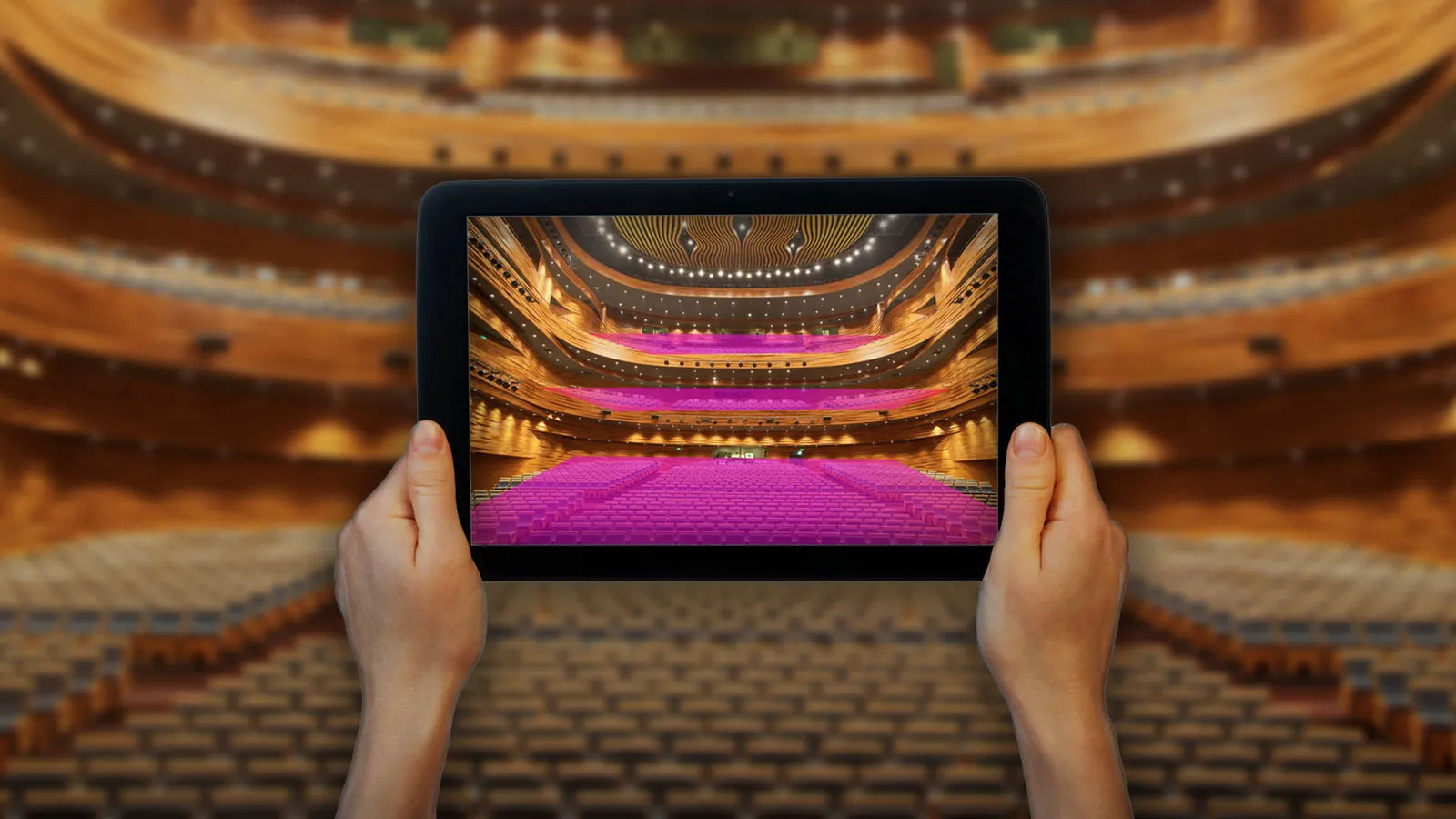
Precision in sound cannot be achieved by hardware alone. EDC Acoustics software tools are designed to predict, validate and verify sound behaviour across entire audiences before a system is installed, so that advanced acoustic technologies perform exactly as intended in real spaces. Performance is designed, tested and confirmed.
Why prediction matters
Every audience contains thousands of unique listening positions. Distance, geometry and orientation vary continuously across a venue, and optimising for a small number of points produces inconsistent experiences. EDC software evaluates performance across the entire audience rather than a single reference position, so design decisions serve every listener, not an idealised seat.
Pro — full-fidelity design, visualisation and verification
Pro is the primary design, modelling and verification environment for EDC acoustic technologies. It predicts sound pressure level and frequency response for over two thousand virtual listening positions distributed across the audience, revealing performance variation rather than averaging it away. Design parameters are refined until clarity and consistency are achieved for every listener.
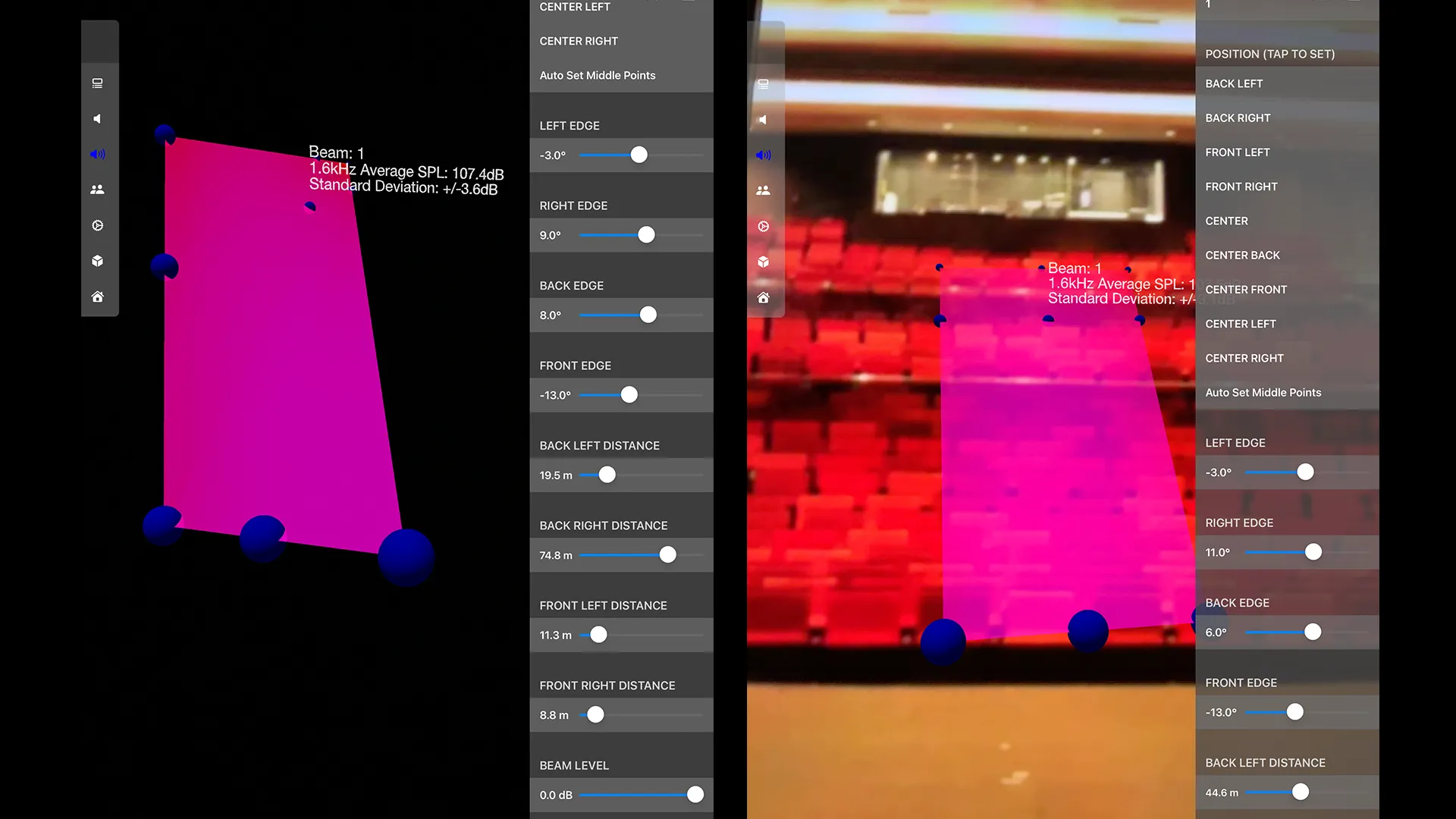
Pro includes augmented-reality visualisation. Audience areas, boundaries and listener regions are defined and visualised at real scale within the physical venue — by walking the perimeter, by sighting, or with LiDAR scanning on supported devices. Design intent becomes spatially tangible: sound can be seen before it exists.
Rapid — fast deployment using the same engine
Rapid is built on the same predictive engines and acoustic intelligence as Pro, using the same models for sound pressure level, frequency response and spatial behaviour, in a streamlined deployment environment. Audience parameters are defined directly and intuitively; systems are configured and deployed quickly while preserving the performance integrity defined in Pro. Rapid is for the rental stage, the touring show and the room that has to be right in twenty minutes.
From simulation to reality
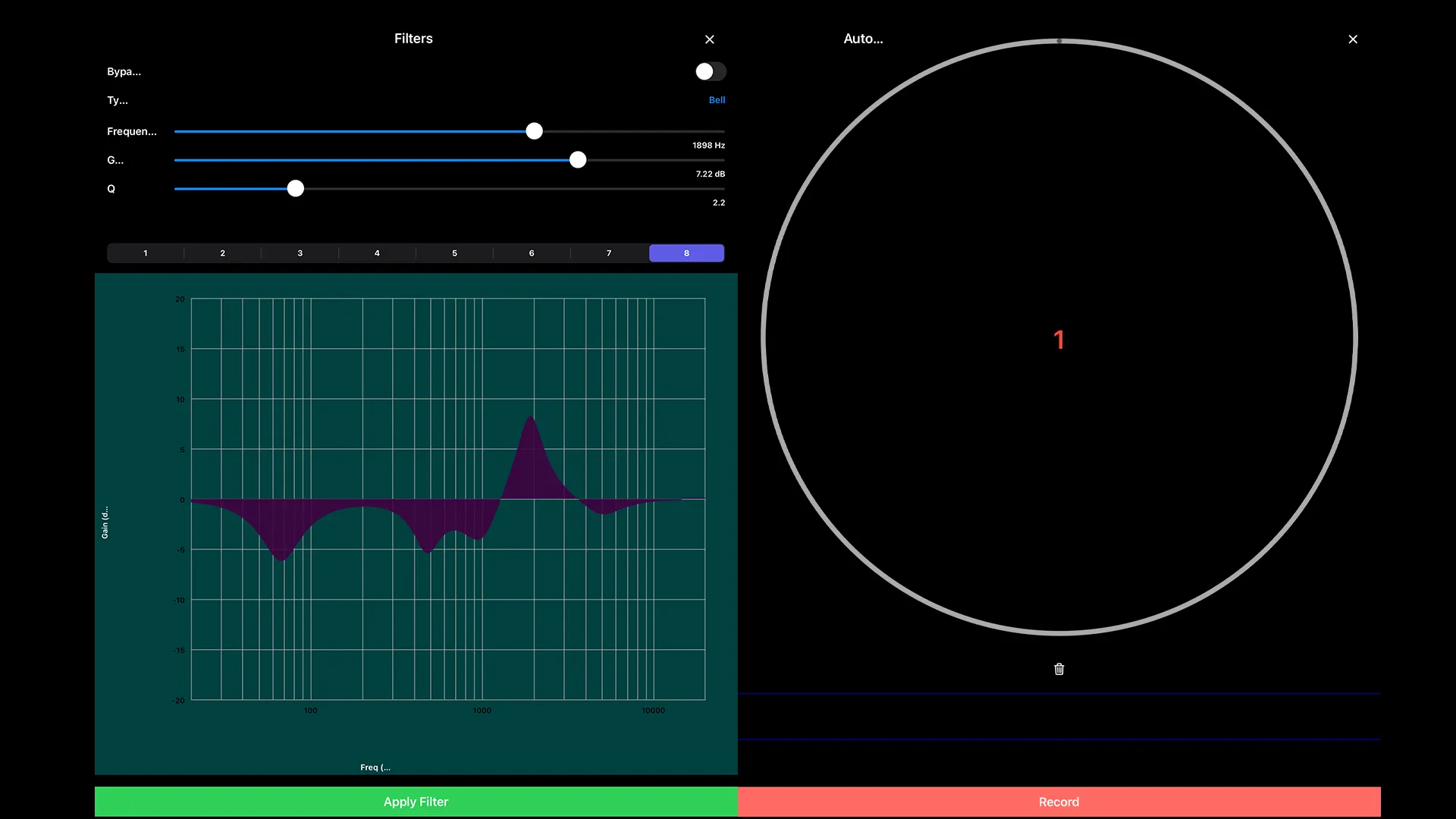
Simulation alone is not sufficient; real spaces introduce variables that cannot be fully anticipated. Both Pro and Rapid support real-world measurement using the built-in microphone of an iOS device. Sound pressure level and frequency response are measured directly in the venue and compared against the prediction. Deviation is identified rather than assumed.
Closed-loop verification and correction
Measured data feeds back into the design environment. Predictions are validated against results, and adjustments are informed by measured performance rather than subjective tuning. Once tuned, a system is locked so that performance stays consistent. This is a closed loop from design through commissioning: design assumptions are proven and outcomes are verified. EDC’s is the only audio software platform that directly links design-stage prediction with commissioning-stage measurement and correction.
One experience, everywhere
By evaluating thousands of listening positions, performance is optimised globally rather than locally: level, frequency response and stereo or immersive imaging stay consistent, and the experience does not depend on where a listener sits. Every position becomes a valid listening position.
What the apps control
Per-array input trim and mute for the three inputs, an 8-band parametric input EQ, an input compressor, beam count, beam shape, level and delay, and a single “push all speakers” deployment. Projects are saved on the device; Pro exports EASE balloon data per beam and per array and a PDF report with 1/3-octave mappings.
- EDC Acoustics Pro — App Store
- EDC Acoustics Rapid — App Store
- iOS application guide v1.0 (PDF)
For integrators and developers
The same control path the apps use is being documented as an open protocol, with an OSC address space, SDKs and plug-ins for Q-SYS, Crestron, Companion and Node-RED. The draft specification is public on the developer pages.
Questions designers ask
What devices run the apps?
How does the app talk to the loudspeakers?
Can I export data for EASE?
What do the apps cost?
Next step
Hear what happens when nothing else interferes.
An EDC session is a technical evaluation of sound behaviour, not a sales demonstration. See reflections reduced, coverage stabilised and spatial accuracy preserved — modelled first, then measured.