Beam-steering loudspeakers
SQ-90
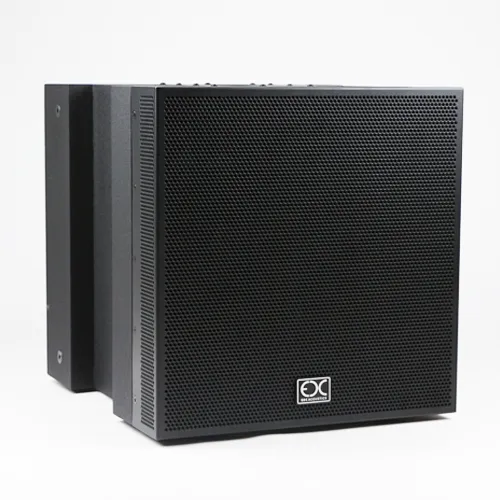
90-channel software-defined square array — the flagship.
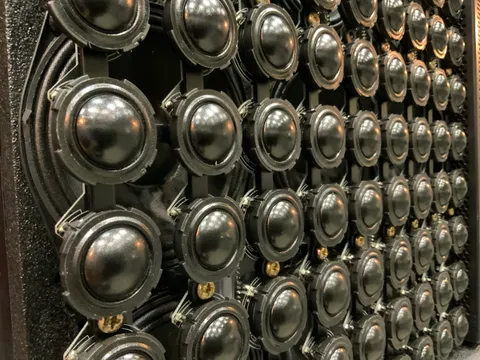
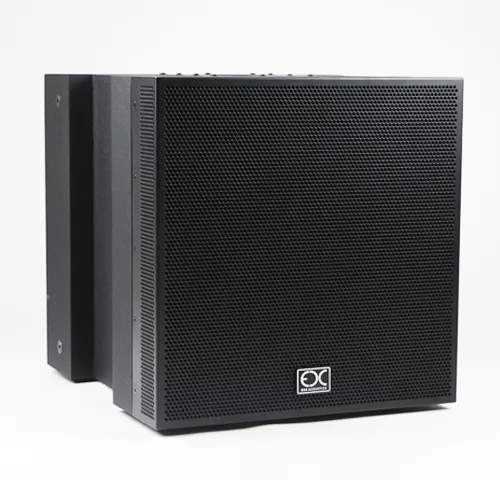
Full-range loudspeaker with 90 individual transducers, 90 amplifiers and 90 DSP channels in a 425 mm square cabinet. Up to four independently shaped beams, horizontal and vertical control, clusterable into larger arrays that behave as one source.
US list price. Project and regional pricing through distributors.
- Dynamic horizontal and vertical control, adjustable between 1° and 120°
- Four unique beams of sound in different directions, each with its own acoustic shape
- Clusters horizontally and vertically to form larger arrays as a single point source
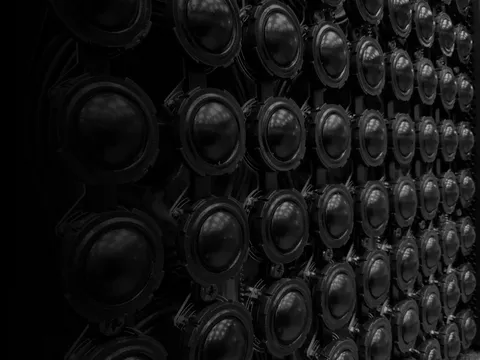
- 81 high-frequency and 9 mid-range drivers, each individually amplified and processed
- Ethernet network control and monitoring; optional Dante or AES3 input
Specifications
SQ-90 at a glance
Values from the current EDC datasheet. Notes mark figures that differ between documents and are being reconciled.
| Acoustic | |
| Frequency range | 80 Hz – 20 kHz (±3 dB) |
|---|---|
| SPL | 106 dB at 16 m (1 element), configuration dependentPeak and continuous figures with method to be published. |
| Coverage control | 1° – 120° horizontal and verticalThe A&E text and pricing page state 2° minimum; being reconciled. |
| Pan / tilt | ±60° in 0.1° steps |
| Beams | 4, independently shaped |
| Horizontal control from | 1 kHz |
| Transducers & amplification | |
| HF drivers | 81 × 1" soft dome, each individually powered |
| LF / mid drivers | 9 × 5", each individually powered |
| DSP channels | 90The superseded v5 datasheet states 109 — David to confirm. |
| Processing | |
| User DSP | HPF/LPF to 48 dB/oct · 8-band parametric EQ · compressor · limiter · delay to 100 m |
| Beam algorithms | FIR, 2,048 taps per channel |
| Connectivity | |
| Audio inputs | 1 × XLR3 line in; optional 1 × XLR3 AES3 (stereo) or 1 × RJ45 Dante |
| Audio output | 1 × XLR3 line out |
| Control | RJ45 Ethernet 10/100 — monitoring and control |
| Power | |
| Mains | 110 – 240 V AC on powerCON TRUE1 |
| Options | 24 V DC alternative supply |
| Physical | |
| Dimensions (W × H × D) | 425 × 430 × 485 mmv5 datasheet stated 430 × 430 × 480 mm. |
| Weight | 36 kg |
| Construction | ½" birch plywoodv5 datasheet stated aluminium. |
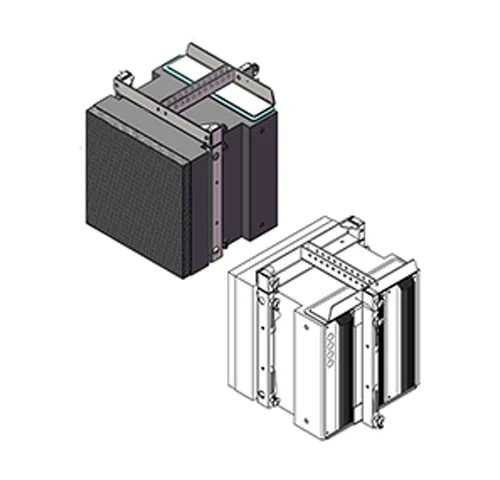
| Rigging | Side and rear rigging tubes; touring frame available |
| Options | |
| Weatherised | Stainless/aluminium hardware, waterproof grille lining, IP65 connectors |
| Monitored | Transducer, thermal and amplifier fault reporting over the network |
The SQ-90 is a high-powered, software-defined loudspeaker designed for large venues and complex audio environments. Ninety individually amplified and processed transducers in a single square cabinet form up to four independent beams, each shaped horizontally and vertically to fit a defined audience area — a balcony, a stalls block, a platform, a foyer — while keeping energy off walls and ceilings.
Cabinets cluster horizontally and vertically to form larger arrays that behave as a single point source, so an installation can grow from one SQ-90 covering a sanctuary to a cluster covering a 5,000-seat arena without changing the design approach. Davidson College’s Belk Arena, Mastercard’s New York headquarters and Time Matters Entertainment’s touring inventory are all SQ-90 systems.
What the numbers mean
Each of the 81 high-frequency and 9 mid-range drivers has its own amplifier and processing channel. Unlike steered columns that broaden a beam by shading drivers down, every SQ-90 transducer contributes full bandwidth whether the beam is narrow or wide, which is what lets one cabinet deliver concert-level output with the transient behaviour of a studio monitor.
Commissioning
Coverage is designed and verified in the EDC Pro App: audience areas are drawn in augmented reality on an iPad, the app predicts level and frequency response across thousands of listening positions, and the settings are pushed to the cabinet over the network. Measured response from the iPad microphone closes the loop.
Downloads
Documents for the SQ-90
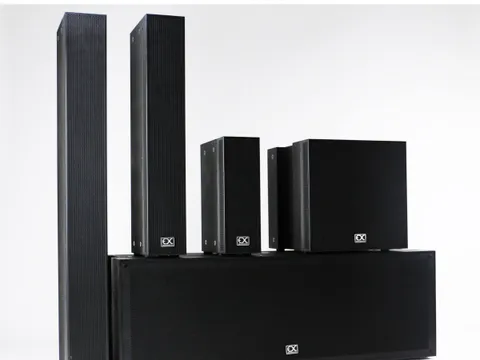
- 3d-pdf 3D PDF models (SC-30, SC-30SL, SC-60, SC-60SL, SC-90, SC-90SL, SQ-90, SS-1, SS-3, wedge)
- ae-spec Architects & Engineers specifications (v1) v1 · 2024-06 · 0.1 MB
- cad CAD (DWG / STEP) and Revit families — all models — to be published
- compliance Declarations of conformity (CE/UKCA, FCC, RCM) — to be published
- datasheet SQ-90 specifications (January 2025) 2025-01 · 2025-01 · 0.6 MB
- datasheet SQ-90 specifications (v5, superseded) v5 · 2024-10 · 0.5 MB
- datasheet Weatherproof series specifications 2025-01 · 2025-01 · 0.1 MB
- gll GLL / EASE Focus data — all models — to be published
- rigging SQ-90 / SS-1 two-cabinet cluster 2024-04 · 1.4 MB
- rigging SQ-90 / SS-1 multiple hang 2024-04 · 0.2 MB
- rigging SQ-90 / SS-1 single hang 2024-04 · 0.6 MB
- rigging SQ-90 / SS-1 / SS-3 / wedge / slimline rigging points 2024-04 · 0.2 MB
- warranty Warranty terms — to be published
Questions about the S-Series
What is the frequency range?
How loud are they?
Can they be used outdoors?
Do they take Dante or AES3 digital audio?
How are they mounted?
Can the system report faults?
Next step
Hear what happens when nothing else interferes.
An EDC session is a technical evaluation of sound behaviour, not a sales demonstration. See reflections reduced, coverage stabilised and spatial accuracy preserved — modelled first, then measured.